
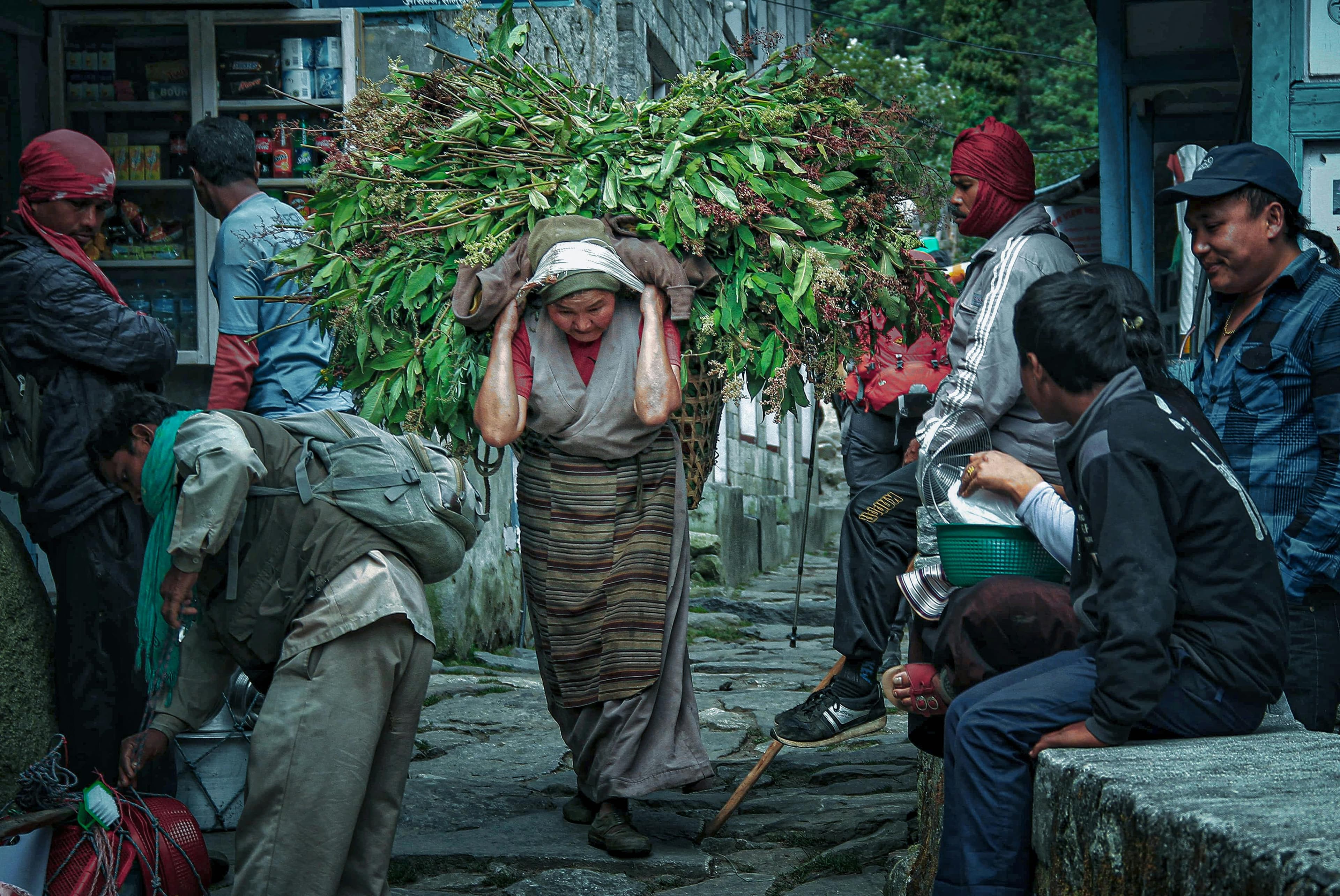
Ghandruk Village Trek: overview
- Duration
- 2–4 days (typically 3)
- Difficulty
- Easy
- Max altitude
- 2,100 m · Bhichok Deurali
- Start / finish
- Nayapul or Kimche (1.5–2.5 h drive from Pokhara) → Dhampus Phedi (40 min drive to Pokhara)
- Best months
- Mar, Apr, Oct, Nov
- Sleep in
- Teahouses and family homestays. Ghandruk has dozens of lodges, from basic rooms to comfortable hotels with attached bathrooms; Landruk, Tolka and Australian Camp have smaller lodges.
- Guide
- Licensed guide required
- Permits
- ACAP (Annapurna Conservation Area Permit), TIMS card
Ghandruk (1,940 m) is one of the largest Gurung villages in Nepal: a hillside of slate-roofed stone houses, flagged lanes and terraced fields with Annapurna South (7,219 m), Hiunchuli and Machhapuchhre (6,993 m) straight ahead. Many families here have served in the British and Indian Gurkha regiments, and the Old Gurung Museum shows how they lived before the road arrived.
This 3-day loop walks up to Ghandruk from Kimche, crosses the Modi Khola to the village of Landruk, and follows the forested ridge via Tolka, Bhichok Deurali and Pothana to Australian Camp and Dhampus before a short drive back to Pokhara. The highest point is only about 2,100 m, so the trek is fine for families and first-timers, though there are long stone staircases on every day.
If you only have 2 days, walk up to Ghandruk and back down to Nayapul. Mantra Mountain is based in Pokhara and runs this trek.
Highlights
- Ghandruk (1,940 m): stone lanes, slate roofs and one of the largest Gurung settlements in Nepal
- Face-on views of Annapurna South, Hiunchuli, Machhapuchhre and Gangapurna from the village
- The Old Gurung Museum, a traditional house displaying farming tools, dress and Gurkha heritage
- Crossing the Modi Khola gorge between Ghandruk and Landruk
- Forest ridge walk from Tolka to Pothana through oak, rhododendron and bamboo
- Sunset over Annapurna and Machhapuchhre from Australian Camp on the final day
- Low altitude (maximum around 2,100 m) and short walking days, suitable for families
Day-by-day itinerary & route map
The standard 3-day itinerary from Pokhara. Tap any day, a marker on the map or a point on the altitude profile to follow the route. Walking times are for an average trekker at a steady pace, without long stops.
Route line and stops are approximate and drawn for planning — not for navigation. Terrain tiles © OpenTopoMap / OpenStreetMap contributors.
Show altitudes as a table
| Day | Route | Sleep | High point |
|---|---|---|---|
| 1 | Pokhara → Nayapul → Kimche → Ghandruk | 1,940 m | — |
| 2 | Ghandruk → Modi Khola → Landruk → Tolka | 1,700 m | — |
| 3 | Tolka → Bhichok Deurali → Pothana → Australian Camp → Dhampus → Pokhara | 820 m | 2,100 m (Bhichok Deurali) |
Day 1: Pokhara → Nayapul → Kimche → Ghandruk
- Sleep altitude
- ▲ 1,940 m
- Time
- ⏱ 2–2.5 h drive + 1.5–2 h walk
- Distance
- ≈ 4 km
Drive to Nayapul, show your permits at Birethanti, and continue by jeep up the Modi Khola road via Syauli Bazar to Kimche (about 1,640 m). From Kimche a stone staircase climbs about 300 m through terraces to Ghandruk in under two hours. Spend the afternoon walking the upper village lanes and visiting the Old Gurung Museum.
Overnight: Teahouse, Ghandruk
Local tip: For sunset, walk 15 minutes above the village to the viewpoint near the ACAP office. Ask your lodge to lend you a Gurung dress (ghalek and cholo) for photos, a popular local custom.
Day 2: Ghandruk → Modi Khola → Landruk → Tolka
- Sleep altitude
- ▲ 1,700 m
- Time
- ⏱ 4–5 h walk
- Distance
- ≈ 8 km
Descend about 600 m on steps through fields and forest to the suspension bridge over the Modi Khola near Kyumi, then climb back up to Landruk (1,565 m), a Gurung village with its own view up the valley towards Annapurna South. After lunch, contour south-east through forest and small streams to the quiet lodges of Tolka.
Overnight: Teahouse, Tolka
Local tip: Stay in Landruk instead of Tolka if you want to catch sunrise from its upper lodges; the walk to Australian Camp the next day is then about an hour longer.
Day 3: Tolka → Bhichok Deurali → Pothana → Australian Camp → Dhampus → Pokhara
- Sleep altitude
- ▲ 820 m
- High point
- Max 2,100 m · Bhichok Deurali
- Time
- ⏱ 5–6 h walk + 40 min drive
- Distance
- ≈ 12 km
Climb through forest to the pass at Bhichok Deurali (about 2,100 m), where the Mardi Himal trail branches off, then descend gently to Pothana (1,890 m) and walk along the ridge to Australian Camp (2,060 m) for lunch with the whole Annapurna range in view. Continue down through the Gurung village of Dhampus (1,650 m) to the road at Dhampus Phedi (1,130 m) for the drive back to Pokhara.
Overnight: Hotel in Pokhara
Local tip: The ACAP checkpoint in Pothana will check your permit again, so keep it handy.
Best time to trek
- Jan: possible
- Feb: possible
- Mar: best
- Apr: best
- May: possible
- Jun: not ideal
- Jul: not ideal
- Aug: not ideal
- Sep: possible
- Oct: best
- Nov: best
- Dec: possible
Not sure which season suits you? Our month-by-month guide to trekking in Nepal covers weather, crowds and festivals.
Permits, fees & the guide rule
| Permit | Cost (foreigners) | Notes |
|---|---|---|
| ACAP (Annapurna Conservation Area Permit) | NPR 3,000 (≈ USD 22); SAARC nationals NPR 1,000 | Issued at the Nepal Tourism Board office in Pokhara (Damside) or Kathmandu, or arranged by your agency. Checked at Birethanti and other ACAP checkpoints. Carry your passport and two photos. |
| TIMS card | NPR 2,000 (≈ USD 15) | Issued through a registered trekking agency, which also arranges the licensed guide now required for foreign trekkers. |
Licensed guide required for foreign trekkers
Since 1 April 2023 the Nepal Tourism Board requires foreign trekkers in national parks and conservation areas, including the Annapurna Conservation Area, to trek with a licensed guide arranged through a registered agency. Checkpoint enforcement on the short Pokhara treks has been inconsistent, but plan on a guide (or at least a licensed porter-guide) rather than count on walking alone, and check the current rules before you go.
Fees as of September 2026. Nepal changes permit rules and prices from time to time — confirm before you travel. Full details in our Nepal trekking permits guide.
Getting there
From Pokhara
Drive 1.5–2 hours to Nayapul on the Baglung highway, then continue by jeep up the dirt road to Kimche or directly into lower Ghandruk (a further 45–60 minutes). Shared jeeps to Ghandruk run from Pokhara's Baglung Bus Park; a reserved jeep is simpler for groups. To walk the whole way, start from Nayapul and allow 5–6 hours to Ghandruk via Syauli Bazar.
From Kathmandu
Reach Pokhara first by tourist bus (6–8 hours, USD 10–25) or flight (25 minutes, USD 100–130), sleep in Pokhara, and start the next morning. Getting to Ghandruk in one day from Kathmandu is possible by private car but makes a very long day.
Getting back
From Dhampus Phedi on the Baglung highway, taxis and local buses reach Pokhara Lakeside in about 40 minutes. On the 2-day version, walk back down to Kimche or Nayapul and take a jeep or taxi, or take a jeep directly from Ghandruk.
How much does the Ghandruk trek cost?
Move the sliders to estimate your own trip. Typical teahouse spend on this route is USD 25–40 per person per day for a room and three meals; a licensed guide costs USD 25–35 a day and a porter USD 18–25.
Estimated cost per person
USD 171
+ about USD 5 in tips for your staff
- Teahouse room & 3 meals × 3 daysUSD 75
- PermitsUSD 36
- Transport to & from trailheadUSD 15
- Licensed guide (shared by 2)USD 45
Do-it-yourself estimate for the Ghandruk Village Trek, from typical 2026 teahouse prices. Excludes flights to Nepal, visa, insurance, gear, drinks, hot showers and charging fees.
- Ghandruk has everything from simple NPR 500–1,000 rooms to hotels charging USD 30–60 with attached bathrooms and views.
- The Old Gurung Museum and village museums charge a small entry fee (usually NPR 100–200).
- A reserved jeep Pokhara–Ghandruk costs noticeably more than a shared seat, so split it if you can.
- Plan to tip the guide and porter 10–15% of their wages at the end.
Important things to know
Altitude & fitness
The maximum altitude of about 2,100 m at Bhichok Deurali carries essentially no altitude-sickness risk. The effort comes from stone staircases: the Modi Khola crossing on Day 2 is a 600 m descent followed by a 300 m climb. Most healthy children over 8 and active older walkers manage it at their own pace.
Trail conditions & roads
Jeep roads reach Kimche, lower Ghandruk, Landruk and Dhampus, so you will cross or walk on dirt road in places, which is dusty in the dry season. The old stone trails are still used between villages and are in good condition. After rain the steps get slippery and the forest above Tolka is muddy.
Water & food
Lodges in all overnight stops serve Nepali and Western food. Ghandruk has an ACAP safe drinking water station for refills; elsewhere buy boiled water from lodges or use a filter. Try a Gurung meal of dhido, gundruk (fermented greens) and local chicken curry in a Ghandruk homestay.
Charging, Wi-Fi & mobile network
Ghandruk has good NTC and Ncell 4G and most lodges have free Wi-Fi. Signal is patchy in the Modi Khola gorge and the forest between Tolka and Deurali, returning at Pothana and Australian Camp. Charging is available in lodges, usually free.
Money & ATMs
Ghandruk has had an ATM at times, but it is not reliable and there is nothing on the rest of the loop. Bring enough cash from Pokhara for rooms, meals, museum fees and tips. Some bigger Ghandruk hotels accept cards with a surcharge.
Weather & hazards
October–November and March–April are best. In the monsoon (June–September) leeches are common in the Tolka–Deurali forest and landslides can close the Kimche road for hours. Winter nights in Ghandruk are around freezing, but days are often clear and sunny.
Rescue & insurance
Road access at Ghandruk, Landruk and Dhampus means most problems are dealt with by jeep, and there is a health post in Ghandruk. Still carry insurance covering trekking and helicopter evacuation (typically USD 3,000–6,000+ if needed). Keep your agency's phone number saved.
Responsible trekking
Ghandruk is a living village, not an open-air museum: ask before entering courtyards or photographing people, and dress modestly. Buy crafts directly from the makers in the village. Carry out all plastic and batteries, and use the ACAP water station instead of bottled water.
Tips for solo trekkers
- Ghandruk is on the main route to Annapurna Base Camp, so its lodges are busy with trekkers heading in both directions; easy company over dinner.
- Landruk and Tolka are much quieter; if you prefer walking with others, ask in Ghandruk who is heading to Australian Camp.
- A licensed guide is officially required. For such a short trek, a porter-guide is the best value for a solo traveller.
- Women travelling alone generally find Ghandruk and the homestays very welcoming; asking an agency for a female guide is possible if you prefer.
- Do not attempt the Modi Khola crossing or forest section after heavy monsoon rain without local advice about landslides.
- The trail from Tolka to Bhichok Deurali has a few unmarked forks; follow the stone steps and ask in Tolka for directions to Deurali.
- Book ahead during Dashain and Tihar (October–November), when Nepali tourists fill Ghandruk hotels.
More in our complete guide to solo trekking in Nepal.
What to pack for this trek
- Trekking poles for the long stone staircases down to and up from the Modi Khola
- Light down jacket or fleece for evenings in Ghandruk (around 0–5 °C from December to February)
- Leech socks and salt from June to September
- Water bottle or filter to refill at the ACAP drinking water station
- Modest clothing for village visits and homestays
- Small cash notes for museum fees and local crafts
The basics are the same for every Nepal trek — see our interactive packing checklist.
Route options & variations
2-day out-and-back
Jeep to Kimche and walk up to Ghandruk on Day 1, then walk down to Kimche or Nayapul and drive back to Pokhara on Day 2. It is the shortest way to spend a night in the village and see sunrise over Annapurna South.
4-day loop via Landruk and Dhampus
Split the last day by sleeping at Australian Camp or Dhampus: Pokhara → Ghandruk, Ghandruk → Landruk, Landruk → Pothana or Australian Camp, then Dhampus → Pokhara. Good for families or anyone who wants sunrise from Australian Camp.
Ghandruk with Poon Hill
Walk the loop in reverse from Poon Hill: Nayapul → Ulleri → Ghorepani → Poon Hill → Tadapani → Ghandruk. See the Ghorepani Poon Hill guide for the 4-day plan.
Ghandruk to Annapurna Base Camp
From Ghandruk, continue via Kimrong Khola or the Komrong Danda trail to Chhomrong, the gateway to the Annapurna Sanctuary. The full ABC trek takes 7–10 days from Pokhara.
Our recommendation
Book the Gandruk Trek with Mantra Mountain
We are a local operator based in Pokhara — the gateway to most of the treks in this guide. Booking with us means a government-licensed guide, permits and TIMS arranged before you arrive, transport from your Pokhara hotel to the trailhead, and a team on the phone if plans change on the trail. Foreign trekkers must trek this route with a licensed guide anyway, so it pays to choose one you trust.
- Licensed, English-speaking local guides
- Permits & TIMS handled for you
- Solo travellers welcome
- Itineraries adjusted to your pace and dates
Ghandruk FAQ
How many days do I need for the Ghandruk trek?
Two days is the minimum: drive to Kimche, walk up to Ghandruk, and return the next day. Three days lets you make a loop via Landruk, Tolka and Australian Camp, which is our recommended option. Four days slows the pace for families.
How difficult is the Ghandruk trek?
It is an easy trek with low altitude (maximum about 2,100 m) and 2–6 hour walking days. The effort comes from stone steps, especially the 600 m descent to the Modi Khola and the climb up to Landruk. No previous trekking experience is needed.
Can I go to Ghandruk by road?
Yes, a dirt road reaches lower Ghandruk and jeeps run from Pokhara in about 3 hours. Walking up from Kimche (1.5–2 hours) or Nayapul (5–6 hours) is more rewarding, and the upper village lanes are car-free.
Do I need a permit for Ghandruk?
Yes. Ghandruk is inside the Annapurna Conservation Area, so foreigners need an ACAP permit (NPR 3,000) and a TIMS card (NPR 2,000) issued through a registered agency. Permits are checked at Birethanti and Pothana.
Can I do the Ghandruk trek without a guide?
Officially, no: since April 2023 foreign trekkers in the Annapurna Conservation Area must have a licensed guide booked through an agency. Enforcement on this short route has been inconsistent, but you should plan for a guide or porter-guide and check the current rules.
How much does the Ghandruk trek cost?
Expect USD 25–40 per person per day for lodges and meals, NPR 5,000 for ACAP and TIMS, and USD 15–55 for transport. Adding a licensed guide (USD 25–35 a day) makes a 3-day trek roughly USD 180–300 per person depending on group size.
What is there to see in Ghandruk?
The Old Gurung Museum and other small family museums, the stone-flagged lanes of the upper village, a small monastery, and viewpoints over Annapurna South, Hiunchuli and Machhapuchhre. Sunset and sunrise from the village are the main events.
Is Ghandruk good for beginners and families?
Yes. It is one of the easiest ways to spend a night in a real mountain village, with road access for emergencies and comfortable lodges. Children who can manage 3–4 hours of stairs a day generally enjoy it.
What is the best time for the Ghandruk trek?
October–November for clear views and March–April for rhododendrons and warm days. December–February is also good if you bring warm layers for cold nights. The monsoon (June–September) means cloud, rain and leeches.
Still have questions? Browse 80+ answers about trekking in Nepal.
Ask us about the Ghandruk trek
Tell us your dates, group size and fitness — our Pokhara team replies by email with honest advice, even if you decide to trek with someone else.