
Panchase Trek: overview
- Duration
- 3–5 days (typically 4)
- Difficulty
- Easy
- Max altitude
- 2,517 m · Panchase Peak
- Start / finish
- Pokhara Lakeside (boat across Phewa Lake) → Kande, then 1 h drive to Pokhara
- Best months
- Feb, Mar, Apr, Oct, Nov, Dec
- Sleep in
- Simple teahouses and homestays. Bhumdi and Bhadaure have family-run homestays; Panchase Bhanjyang has a few basic lodges with shared toilets. Expect fewer comforts than on the Poon Hill route.
- Guide
- Licensed guide required
- Permits
- ACAP (Annapurna Conservation Area Permit), TIMS card
Panchase is the forested ridge you see west of Phewa Lake from Pokhara, and Panchase Peak (2,517 m) is its top. From here the view runs from Dhaulagiri past the whole Annapurna range and Machhapuchhre to Lamjung Himal and Manaslu, with Phewa Lake and Pokhara laid out below. The hill is sacred to Hindus and Buddhists, with a small temple and five ponds (panch = five, sar = lake) near the summit.
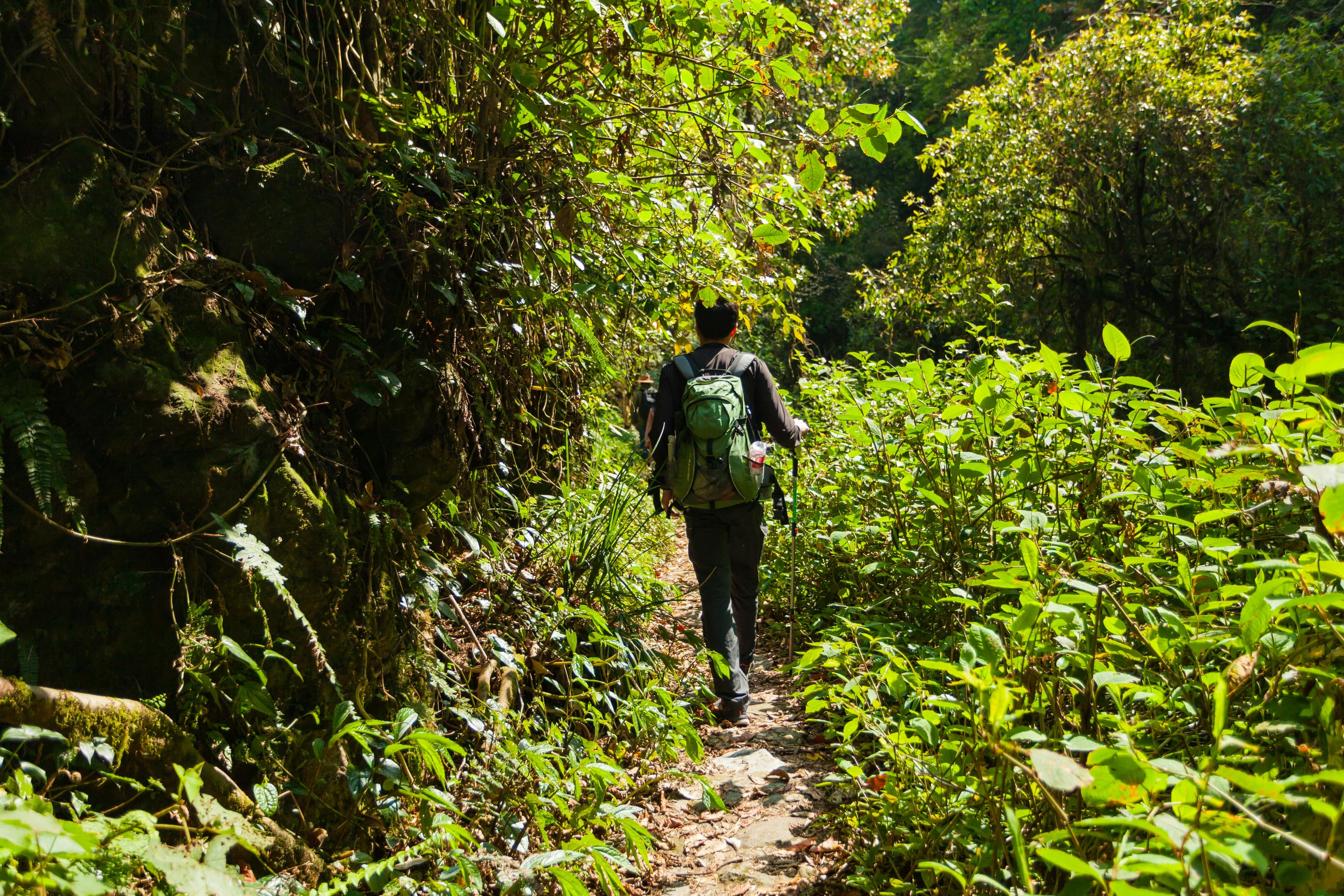
The 4-day trek starts with a boat across Phewa Lake, climbs past the World Peace Pagoda to the village of Bhumdi, then continues through rhododendron and oak forest to Panchase Bhanjyang. After sunrise from the peak you descend to the Gurung village of Bhadaure and finish via Australian Camp and Kande. It is one of the least crowded treks near Pokhara, with good birdlife and simple homestays.
No day goes above 2,517 m and walking days are 3–6 hours, so it suits families and first-time trekkers who would rather avoid crowds. Mantra Mountain is based in Pokhara and runs this trek.
Highlights
- 360° sunrise from Panchase Peak (2,517 m): Dhaulagiri, Annapurna South, Annapurna I, Machhapuchhre, Annapurna II, Lamjung Himal and Manaslu
- Starting on foot from Lakeside: a boat across Phewa Lake and a climb past the World Peace Pagoda
- Dense rhododendron, oak and magnolia forest with good birdwatching; the ridge is known for its orchids and birds
- The small hilltop temple and ponds that make Panchase a pilgrimage site, busiest at the Janai Purnima festival
- Homestays in the Gurung and Brahmin villages of Bhumdi and Bhadaure
- Far fewer trekkers than Poon Hill or Ghandruk
- An easy finish via Australian Camp for a second big Annapurna view
Day-by-day itinerary & route map
The standard 4-day itinerary from Pokhara. Tap any day, a marker on the map or a point on the altitude profile to follow the route. Walking times are for an average trekker at a steady pace, without long stops.
Route line and stops are approximate and drawn for planning — not for navigation. Terrain tiles © OpenTopoMap / OpenStreetMap contributors.
Show altitudes as a table
| Day | Route | Sleep | High point |
|---|---|---|---|
| 1 | Pokhara → boat across Phewa → World Peace Pagoda → Bhumdi | 1,300 m | — |
| 2 | Bhumdi → Panchase Bhanjyang | 2,070 m | — |
| 3 | Panchase Peak sunrise → Panchase Bhanjyang → Bhadaure | 1,647 m | 2,517 m (Panchase Peak) |
| 4 | Bhadaure → Australian Camp → Kande → Pokhara | 820 m | 2,060 m (Australian Camp) |
Day 1: Pokhara → boat across Phewa → World Peace Pagoda → Bhumdi
- Sleep altitude
- ▲ 1,300 m
- Time
- ⏱ 4–5 h walk
- Distance
- ≈ 10 km
Take a rowing boat from Lakeside across Phewa Lake (20–30 minutes) and climb the stone steps through forest to the World Peace Pagoda (about 1,100 m) for views back over the lake to the Annapurnas. The trail then follows the ridge west through farmland and small villages, with some road sections, to the scattered village of Bhumdi (about 1,300 m).
Overnight: Homestay or teahouse, Bhumdi
Local tip: If you prefer to skip the road walking, take a taxi from Lakeside to Bhumdi (about 1 hour) and start walking on Day 2.
Day 2: Bhumdi → Panchase Bhanjyang
- Sleep altitude
- ▲ 2,070 m
- Time
- ⏱ 4–5 h walk
- Distance
- ≈ 9 km
A steady climb of about 800 m, first through terraces then into thick rhododendron and oak forest, following the forest path from Bhumdi to Panchase Bhanjyang. The small settlement on the saddle (about 2,070 m) has a few basic lodges and views towards Machhapuchhre. Arrive in the early afternoon.
Overnight: Teahouse, Panchase Bhanjyang
Local tip: Buy snacks and water in Bhumdi; there is almost nothing in the forest for most of the day.
Day 3: Panchase Peak sunrise → Panchase Bhanjyang → Bhadaure
- Sleep altitude
- ▲ 1,647 m
- High point
- Max 2,517 m · Panchase Peak
- Time
- ⏱ 2 h peak round trip + 2–3 h walk
- Distance
- ≈ 8 km
Leave around 5 am for the 1-hour, 450 m climb through forest to Panchase Peak, where a viewing platform, temple and ponds sit above the tree line. After sunrise and breakfast back at Bhanjyang, descend north-east through forest and pasture to Bhadaure (about 1,650 m), a quiet farming village with views of the Annapurnas.
Overnight: Homestay, Bhadaure
Local tip: Clouds build fast after 8 am in spring, so linger at the top in the first hour after sunrise rather than later.
Day 4: Bhadaure → Australian Camp → Kande → Pokhara
- Sleep altitude
- ▲ 820 m
- High point
- Max 2,060 m · Australian Camp
- Time
- ⏱ 3–4 h walk + 1 h drive
- Distance
- ≈ 9 km
Walk north through fields and forest to the Pokhara–Baglung highway near Kande, then climb 300 m to Australian Camp (2,060 m) for lunch facing Annapurna South and Machhapuchhre. Walk back down to Kande for the hour's drive to Pokhara, or continue through Dhampus to Dhampus Phedi.
Overnight: Hotel in Pokhara
Best time to trek
- Jan: possible
- Feb: best
- Mar: best
- Apr: best
- May: possible
- Jun: not ideal
- Jul: not ideal
- Aug: not ideal
- Sep: possible
- Oct: best
- Nov: best
- Dec: best
Not sure which season suits you? Our month-by-month guide to trekking in Nepal covers weather, crowds and festivals.
Permits, fees & the guide rule
| Permit | Cost (foreigners) | Notes |
|---|---|---|
| ACAP (Annapurna Conservation Area Permit) | NPR 3,000 (≈ USD 22); SAARC nationals NPR 1,000 | Panchase is in the Annapurna Conservation Area; checks are infrequent but the permit is required. Get it in Pokhara before you start. |
| TIMS card | NPR 2,000 (≈ USD 15) | Issued through a registered trekking agency, which also arranges the licensed guide now required for foreign trekkers. |
Licensed guide required for foreign trekkers
Since 1 April 2023 the Nepal Tourism Board requires foreign trekkers in national parks and conservation areas, including the Annapurna Conservation Area, to trek with a licensed guide arranged through a registered agency. Checkpoint enforcement on the short Pokhara treks has been inconsistent, but plan on a guide (or at least a licensed porter-guide) rather than count on walking alone, and check the current rules before you go.
Fees as of September 2026. Nepal changes permit rules and prices from time to time — confirm before you travel. Full details in our Nepal trekking permits guide.
Getting there
From Pokhara
The trek starts on foot from Lakeside. Boats cross Phewa Lake to the Peace Pagoda trail landing in 20–30 minutes; a one-way rowing boat costs roughly NPR 700–1,200 per boat. Alternatively, drive to Bhumdi (about 1 hour) or directly to Panchase Bhanjyang via Bhadaure by jeep (2–3 hours) to shorten the trek.
From Kathmandu
Take a tourist bus (6–8 hours, USD 10–25) or flight (25 minutes, USD 100–130) to Pokhara, stay the night near Lakeside, and start the next morning from the boat stand.
Getting back
From Kande or Dhampus Phedi, taxis and buses to Pokhara take about 40 minutes to 1 hour. From Bhumdi, local buses run to Pokhara a few times a day, if you choose to walk back the way you came.
How much does the Panchase trek cost?
Move the sliders to estimate your own trip. Typical teahouse spend on this route is USD 25–35 per person per day for a room and three meals; a licensed guide costs USD 25–35 a day and a porter USD 18–25.
Estimated cost per person
USD 206
+ about USD 7 in tips for your staff
- Teahouse room & 3 meals × 4 daysUSD 100
- PermitsUSD 36
- Transport to & from trailheadUSD 10
- Licensed guide (shared by 2)USD 60
Do-it-yourself estimate for the Panchase Trek, from typical 2026 teahouse prices. Excludes flights to Nepal, visa, insurance, gear, drinks, hot showers and charging fees.
- Homestays in Bhumdi and Bhadaure charge roughly NPR 2,500–4,000 per person including dinner and breakfast.
- Menus are shorter than on the Poon Hill route, but prices are also lower.
- Transport covers the Phewa boat and a taxi back from Kande; skipping the boat and taxiing to Bhumdi costs a little more.
- Plan a 10–15% tip for the guide and porter at the end.
Important things to know
Altitude & fitness
The top of the trek is 2,517 m, well below the height where altitude sickness is a concern. The main effort is the 800 m climb from Bhumdi to Panchase Bhanjyang on Day 2 and the early climb to the peak. Walking days are 3–6 hours.
Trail conditions & roads
Rural roads now link most villages around Panchase, so some sections on Days 1 and 4 follow dirt roads. The forest sections are narrow trail, well used by locals but not always signposted, and muddy after rain. Ask locals or your guide at every junction below Panchase Bhanjyang.
Water & food
Meals are simpler here: dal bhat, noodles and eggs are always available, but Western dishes are limited. Carry 2 litres of water on the forest days and treat refills with a filter or tablets. Homestay meals are often the highlight.
Charging, Wi-Fi & mobile network
NTC and Ncell signal is good near Pokhara and on the ridge top, with gaps in the forest. Some homestays in Bhumdi and Bhadaure have Wi-Fi; Panchase Bhanjyang lodges have limited power and may charge for charging. Bring a power bank.
Money & ATMs
There are no ATMs on the route. Take enough cash from Pokhara for homestays, meals, the boat and tips. Cards are not accepted.
Weather & hazards
October–December gives the clearest views, and February–April brings rhododendron and magnolia flowers in the forest. Monsoon (June–September) brings leeches and very slippery trails, and fog can make the ridge disorientating. Winter nights at Panchase Bhanjyang drop to around freezing.
Rescue & insurance
Roads come close to most of the route, so evacuation is usually by jeep to Pokhara, 1–3 hours away. Carry insurance that covers trekking and helicopter evacuation in case of a serious injury in the forest sections.
Responsible trekking
Panchase Peak is a holy site: remove shoes where asked near the temple, don't swim in or wash in the ponds, and keep noise down. Homestays depend on trekkers eating and sleeping in the village, so choose them over bringing your own food.
Tips for solo trekkers
- Panchase is quiet, which is the point, but you may not see other trekkers for hours; do not walk the forest sections alone.
- A licensed guide is officially required and is particularly useful here because trail junctions are poorly marked.
- The Peace Pagoda and Phewa boat section on Day 1 is busy with day visitors and safe to do alone.
- Women travelling solo are generally welcomed in homestays, but lodges at Panchase Bhanjyang are basic with shared rooms at times; ask for a private room or a female guide.
- Avoid the forest sections during heavy rain or thick fog; the ridge trail is easy to lose.
- Around the Janai Purnima festival (August) and Hindu holidays, pilgrims crowd the peak and lodges fill up.
- Tell your lodge in Pokhara your route and expected return; it's the kind of quiet trek where that matters.
More in our complete guide to solo trekking in Nepal.
What to pack for this trek
- Headlamp for the 5 am climb to Panchase Peak
- Warm jacket, hat and gloves for sunrise on the peak
- 2 litres of water capacity and a filter or tablets
- Leech socks from June to September
- Binoculars for birdwatching in the forest
- Offline map app (Maps.me or OsmAnd) with the route downloaded
- Toilet paper and hand sanitiser for basic lodges
The basics are the same for every Nepal trek — see our interactive packing checklist.
Route options & variations
3-day version by jeep
Drive to Bhumdi, walk to Panchase Bhanjyang on Day 1, climb the peak for sunrise and descend to Bhadaure on Day 2, then walk to Kande via Australian Camp and drive back on Day 3.
Loop back to Phewa Lake
From Panchase Bhanjyang, descend towards Bhumdi and Pame on the lake's west side and walk or taxi back along Phewa Lake to Lakeside, making a 3-day loop without road transport at the start.
Panchase with Australian Camp and Dhampus
Add a night at Australian Camp on Day 4 and walk down through Dhampus on Day 5 for a 5-day trek with two major Annapurna viewpoints.
Our recommendation
Book the Panchase Trek with Mantra Mountain
We are a local operator based in Pokhara — the gateway to most of the treks in this guide. Booking with us means a government-licensed guide, permits and TIMS arranged before you arrive, transport from your Pokhara hotel to the trailhead, and a team on the phone if plans change on the trail. Foreign trekkers must trek this route with a licensed guide anyway, so it pays to choose one you trust.
- Licensed, English-speaking local guides
- Permits & TIMS handled for you
- Solo travellers welcome
- Itineraries adjusted to your pace and dates
Panchase FAQ
How difficult is the Panchase trek?
It is an easy trek. The maximum altitude is 2,517 m and walking days are 3–6 hours, with one 800 m climb from Bhumdi to Panchase Bhanjyang. No previous trekking experience is needed.
How many days is the Panchase trek?
The standard itinerary is 4 days, starting on foot from Lakeside with a boat across Phewa Lake. You can cut it to 3 days by driving to Bhumdi, or extend it to 5 days with a night at Australian Camp.
Do I need a permit for the Panchase trek?
Yes. Panchase is part of the Annapurna Conservation Area, so you need an ACAP permit (NPR 3,000) and a TIMS card (NPR 2,000), issued in Pokhara or Kathmandu through a registered trekking agency.
Can I do the Panchase trek without a guide?
Officially, a licensed guide is required for foreigners in the Annapurna Conservation Area since April 2023. Checks are rare on Panchase, but trail junctions are poorly marked and the forest is quiet, so a guide is useful even aside from the rule.
How much does the Panchase trek cost?
Budget USD 25–35 per day for homestays and meals, NPR 5,000 for permits, and USD 10–35 for the boat and taxis. With a licensed guide, a 4-day trek costs roughly USD 200–320 per person depending on group size.
What is the best time for the Panchase trek?
October to December for the clearest views, and February to April for flowering rhododendrons and magnolias. January is clear but cold at night. The monsoon (June–September) brings rain, leeches and cloud.
What can you see from Panchase Peak?
On a clear morning: Dhaulagiri, Annapurna South, Annapurna I, Hiunchuli, Machhapuchhre, Annapurna II, Lamjung Himal and Manaslu, plus Phewa Lake and Pokhara to the east. The view is wider than from Poon Hill but more distant.
Is Panchase good for beginners?
Yes, especially for beginners who dislike crowds. Lodges are simpler and the trail less marked than Poon Hill, so go with a guide and expect basic comforts.
Still have questions? Browse 80+ answers about trekking in Nepal.
Ask us about the Panchase trek
Tell us your dates, group size and fitness — our Pokhara team replies by email with honest advice, even if you decide to trek with someone else.