
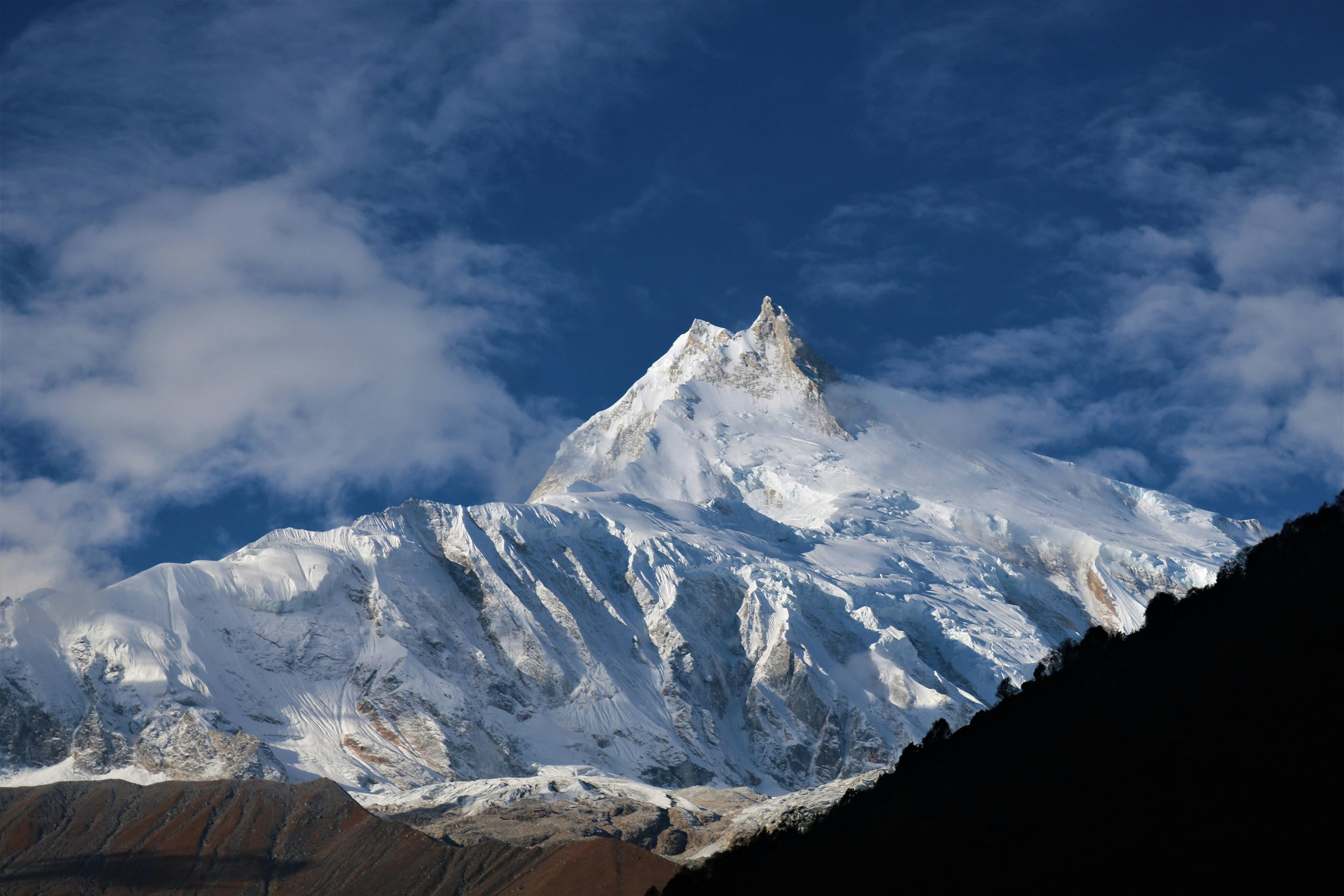
Manaslu Circuit Trek
Nepal's greatest off-beaten-path circuit — beneath the world's 8th highest peak
Pricing
Rates differ for Nepali citizens and international guests because foreign trekkers require TIMS and conservation-area permits. Final quotes depend on group size and dates.
Nepali
From NPR 120,000 per person (incl. restricted permits & guide)
Foreigner
From USD 1,350 per person (incl. all permits, guide & transport)
The Manaslu Circuit is a restricted trekking area. Foreign trekkers require: (1) Manaslu Restricted Area Permit — USD 100/person for the first 7 days in peak season (Sep–Nov), USD 75 in off-season, plus USD 15/day extra; (2) Manaslu Conservation Area Permit (MCAP) — NPR 3,000; (3) Annapurna Conservation Area Permit (ACAP) — NPR 3,000. A minimum of 2 trekkers with a licensed guide is mandatory. All permits must be arranged through a registered trekking agency — individual applications are not accepted.
Highlights
- Circuit around Mt. Manaslu (8,163 m) — Earth's 8th highest peak — with intimate views unavailable from any other trail
- Larkya La Pass (5,160 m) — one of the most spectacular high passes in Nepal, with views of Himlung Himal, Cheo Himal, Manaslu, and the Annapurna range on descent
- Budhi Gandaki valley — a deep gorge with suspension bridges, waterfalls, and stone-stepped trails through jungle
- Samagaon (3,530 m) — the most significant Tibetan-culture village on the route, with an ancient monastery and views directly to Manaslu's south face
- Birendra Lake — a glacial lake at 3,450 m near Manaslu Base Camp, accessible as a side trip from Samagaon
- Far fewer trekkers than the Annapurna Circuit or Everest Base Camp — genuine wilderness experience
- Rich Tibetan Buddhist culture throughout: mani walls, chortens, prayer flags, gompas in every village
- Diverse ecosystems — subtropical forest (jungle with monkeys near Soti Khola) to Tibetan plateau alpine terrain
Best season
March–May & September–November. Autumn (October–November) is peak for stable weather and pass conditions. Spring (March–April) offers rhododendron blooms in lower valleys. The Larkya La Pass can hold dangerous snow outside these windows.
Itinerary
Outline below; we tailor rest days and pacing to your group.
- 1
Day 1: Kathmandu → Soti Khola / Machha Khola (930 m)
Drive from Kathmandu northwest to Arughat and on to Machha Khola or Soti Khola (~7–8 hours by jeep). These small villages mark the start of the Budhi Gandaki valley trek. Overnight at a simple guesthouse.
- 2
Day 2: Machha Khola → Jagat (1,340 m)
Trek along the Budhi Gandaki River, crossing multiple suspension bridges through subtropical jungle. Jagat is the first checkpost where your Manaslu Restricted Area Permit is verified — the official gateway to the restricted zone. Overnight in Jagat.
- 3
Day 3: Jagat → Deng (1,860 m)
The valley narrows dramatically as the trail enters pine and rhododendron forest. The landscape becomes more dramatic with waterfalls and steep canyon walls. Pass through Salleri and Sirdibas to Deng. Overnight in Deng.
- 4
Day 4: Deng → Namrung (2,630 m)
Altitude increases steadily. Pass through Ghap and cross the Budhi Gandaki via a dramatic suspension bridge. Mani walls and Buddhist chortens become frequent markers as the culture shifts distinctly Tibetan. First views of Ganesh Himal and Himalchuli. Overnight in Namrung.
- 5
Day 5: Namrung → Lho → Samagaon (3,530 m)
Pass through Lho village for the first dramatic view of Manaslu's south face — an awe-inspiring mountain encounter. Continue to Samagaon, a large, prosperous Tibetan village with a 400-year-old monastery (Pungyen Gompa) and views directly toward Manaslu Base Camp. Overnight in Samagaon.
- 6
Day 6: Acclimatisation day — Samagaon
Essential rest and acclimatisation day. Options include a hike to Manaslu Base Camp (4,800 m) for close-up glacier views, or a walk to the turquoise Birendra Lake (3,450 m). Both provide the altitude adaptation needed before pushing to Samdo and Larkya La. Overnight in Samagaon.
- 7
Day 7: Samagaon → Samdo (3,860 m)
A shorter trekking day allowing further acclimatisation. Samdo is a Tibetan refugee village close to the Nepal–Tibet border. The dry, windswept landscape resembles the high Tibetan plateau. Optional side hike to the ridge above for views into Tibet. Overnight in Samdo.
- 8
Day 8: Samdo → Dharamsala / Larkya Phedi (4,460 m)
A short but critical day — gaining altitude before the pass. Dharamsala (also called Larkya Phedi) is a basic high-camp with limited but adequate accommodation. Rest, hydrate well, and prepare your gear for the pass crossing. Overnight at Dharamsala.
- 9
Day 9: Larkya La Pass (5,160 m) → Bimthang (3,590 m)
The longest and most demanding day of the trek — begin before dawn (typically 4:00–5:00 AM). Ascend steadily across glacial moraine and snow slopes to Larkya La Pass, where you are rewarded with one of Nepal's finest mountain panoramas: Himlung Himal (7,126 m), Cheo Himal, Kang Guru, and the full Annapurna range spread across the horizon. The long descent to Bimthang passes through rhododendron forest — an extraordinary contrast with the high arctic pass. Overnight in Bimthang.
- 10
Day 10: Bimthang → Dharapani → drive to Pokhara / Kathmandu
Descend through Gho and Tilije villages, rejoining the Annapurna Circuit route at Dharapani. From here drive to Besisahar, then onward to Pokhara (~3 hours) or Kathmandu (~7 hours). Final trekking days can be extended for acclimatisation or weather buffers.
Included
- Experienced English-speaking, government-licensed high-altitude guide
- Porter support (1 porter per 2 trekkers)
- All required trekking permits: Manaslu Restricted Area Permit (RAP), Manaslu Conservation Area Permit (MCAP), Annapurna Conservation Area Permit (ACAP), and Chumnubri Rural Municipality fee
- Teahouse accommodation (twin-sharing) throughout the trek
- All meals on trek — breakfast, lunch, and dinner
- Private jeep transport Kathmandu ↔ Soti Khola / Arughat and Dharapani ↔ Besisahar ↔ Pokhara / Kathmandu
- First aid kit including pulse oximeter for daily AMS monitoring
- Emergency evacuation coordination (helicopter rescue cost excluded)
Not included
- International flights and Nepal entry visa
- Travel and high-altitude helicopter rescue insurance (mandatory — Manaslu rescues are expensive)
- Hot drinks, mineral water, bottled beer, and personal snacks
- Personal trekking equipment: sleeping bag rated to −15°C, down jacket, trekking poles, crampons (recommended for Larkya La in spring/early season)
- Tips for guide and porter (strongly customary)
- Tsum Valley extension permits (if adding the Tsum Valley side trek — add USD 40–70/person/week)
- Kathmandu hotel accommodation (available on request)